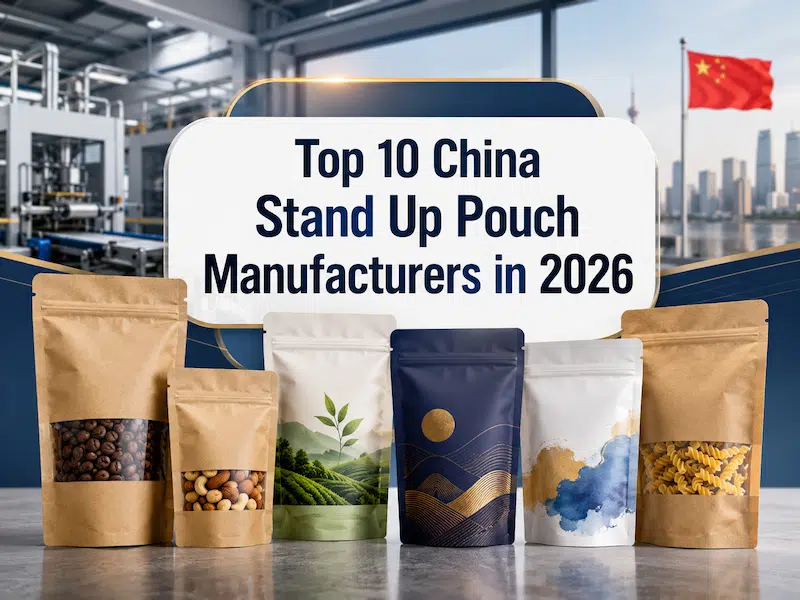

Many companies begin looking for a stand up pouch manufacturer when they know they need flexible packaging, but they are not yet sure which pouch style, material, or feature will work best for their product.
This is very common for coffee brands, snack companies, supplement teams, pet treat brands, cosmetics businesses, and many other product categories.
This article will help you understand how to screen pouch suppliers, what questions to ask before requesting a quotation, and how to compare manufacturers when the pouch style or material structure is still unclear. It will also show you some warning signs to watch for during the sourcing process.
Start With the Type of Supplier You Actually Need
Many companies think they need a pouch right away. In reality, they first need a supplier that can guide the pouch decision.
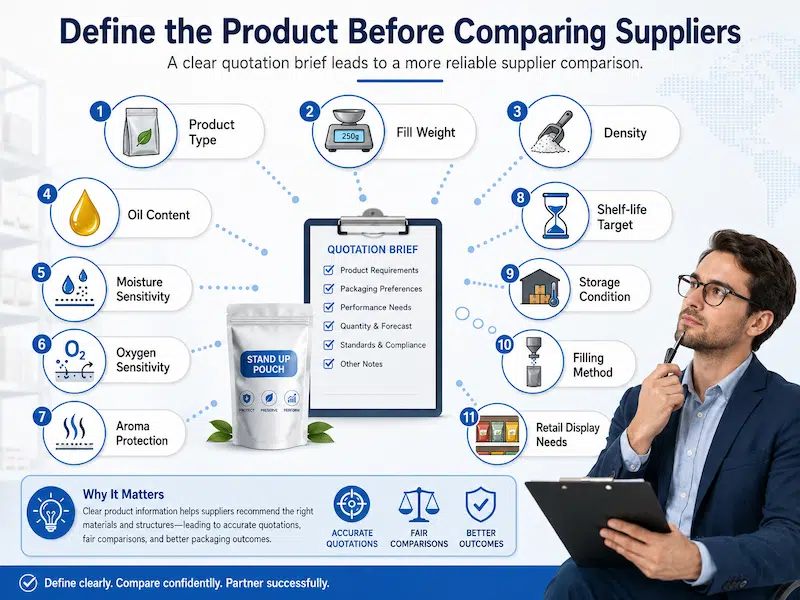
If your team does not yet know the right size, material, zipper type, barrier level, or printing method, do not start by asking only for a low price.
Start by looking for a stand up pouch supplier that asks good questions.
A helpful supplier should ask about your product type, fill weight, density, oil content, moisture sensitivity, oxygen sensitivity, aroma protection, target shelf life, storage condition, filling method, and retail display needs.
These questions matter because coffee, powder, snacks, pet treats, liquids, frozen food, and supplements do not use the same pouch structure. A good supplier understands that. A weak supplier may offer the same pouch for every product.
Look for a Supplier Who Can Recommend, Not Just Quote
A good stand up pouch supplier should do more than send a price list.
When your pouch style, material, or features are still not fully clear, the supplier should help you make sense of the options.
For example, they should be able to explain why a flat bottom pouch may work better than a standard stand up pouch, why a high-barrier material may be needed for some products, or why a simpler structure may already be enough for your packaging goal.
This matters because over-specifying a pouch can easily increase cost without improving product performance.
A useful supplier will not push every feature into the quotation. Instead, they will look at your product, shelf-life needs, filling method, storage conditions, and display requirements, then suggest a structure that fits the real application.
For many companies sourcing custom stand up pouches, this kind of guidance is more valuable than a long list of technical terms. What they really need is a supplier who can turn product details into a clear, practical packaging recommendation.
Check Whether the Supplier Offers the Right Pouch Styles
Even if you do not yet know the final pouch style, the supplier should be able to walk you through the main options.
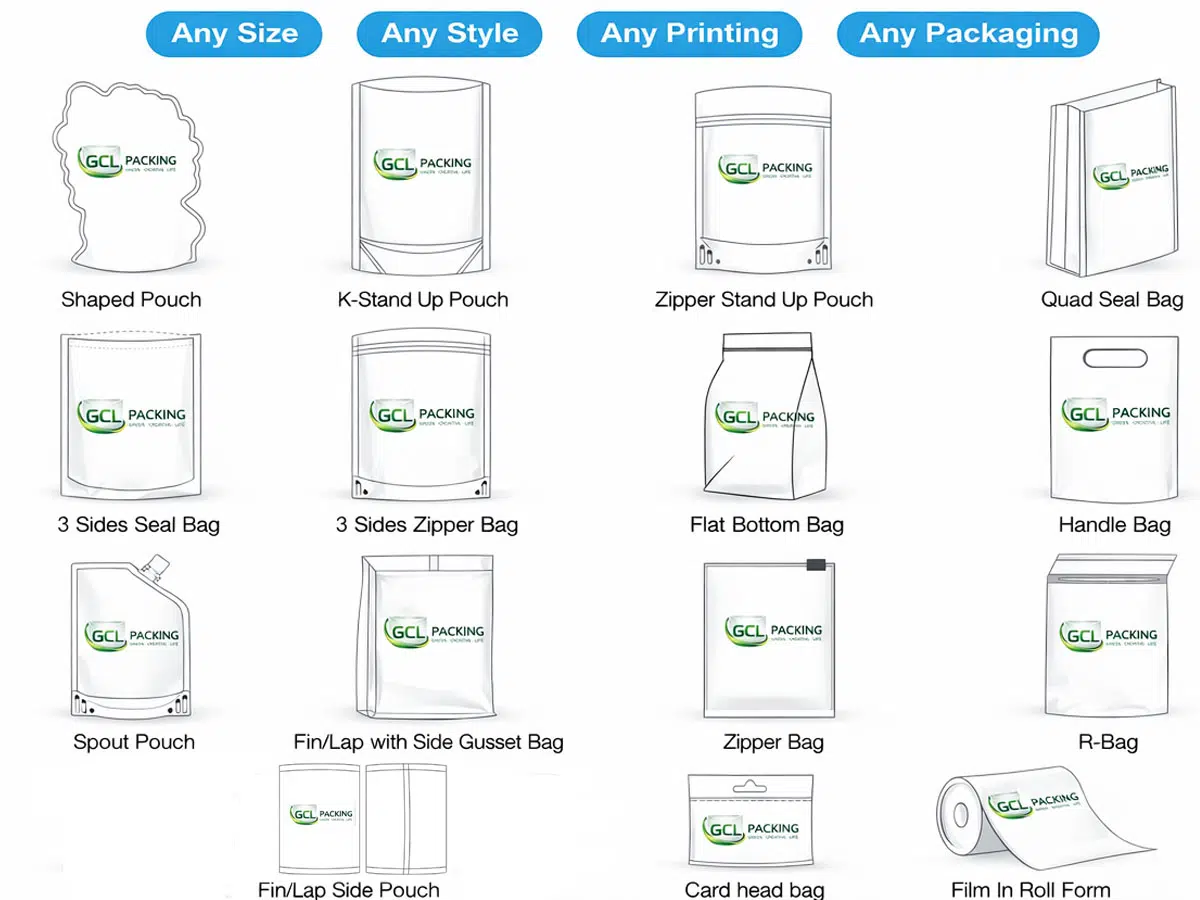
A capable supplier should offer more than one basic pouch format. Different pouch types fit different packaging needs.
- Stand up pouches are suitable for dry goods and retail products that need good shelf display.
- Flat bottom pouches offer better stability and a more premium shelf look.
- Spout pouches are used for liquids, gels, sauces, and refill products.
- Three-side seal pouches are suitable for small packs, samples, powder portions, and single-use products.
- Vacuum pouches are used for products that need air removal, tight sealing, or better freshness protection.
- Packaging film is mainly used for large-volume production and automatic packing lines. It works well for brands that use form-fill-seal machines, flow packing machines, or automated filling systems.
This step is not only about pouch variety. It shows whether the supplier can match packaging to product use.
GCLPacking supports multiple flexible pouch styles for food, coffee, powder, pet food, cosmetics, and other product categories, which is helpful when a company is still comparing options.
Ask How the Supplier Chooses Materials
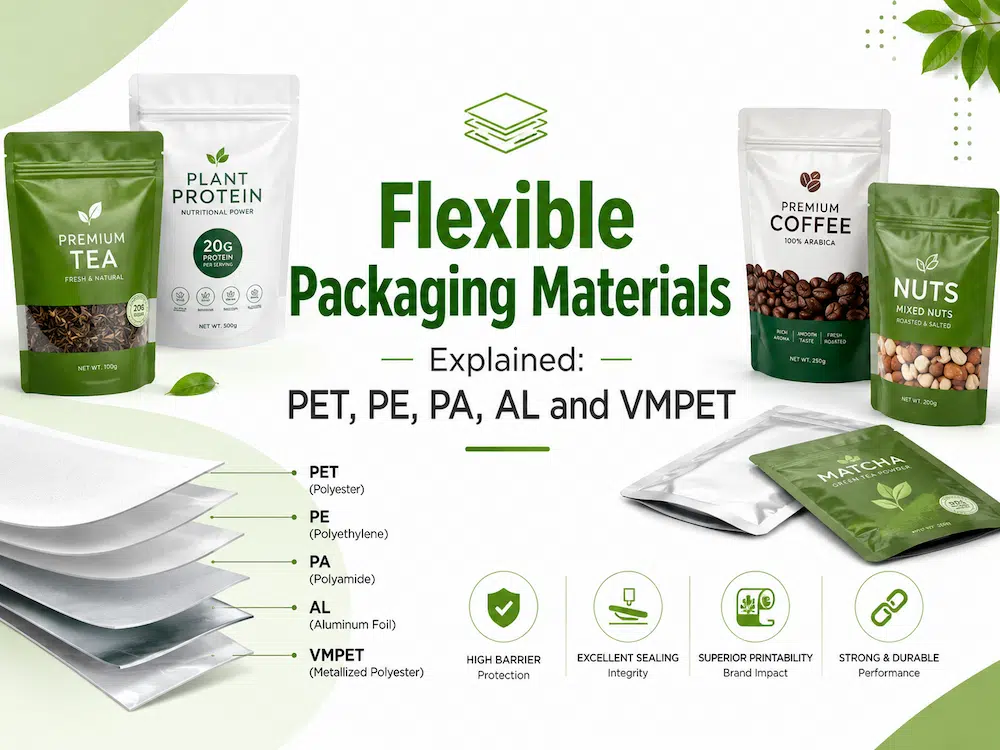
Many customers do not know the difference between PET/PE, PET/VMPET/PE, PET/AL/PE, Kraft/AL/PE, NY/PE, or recyclable mono-material structures. That is also normal.
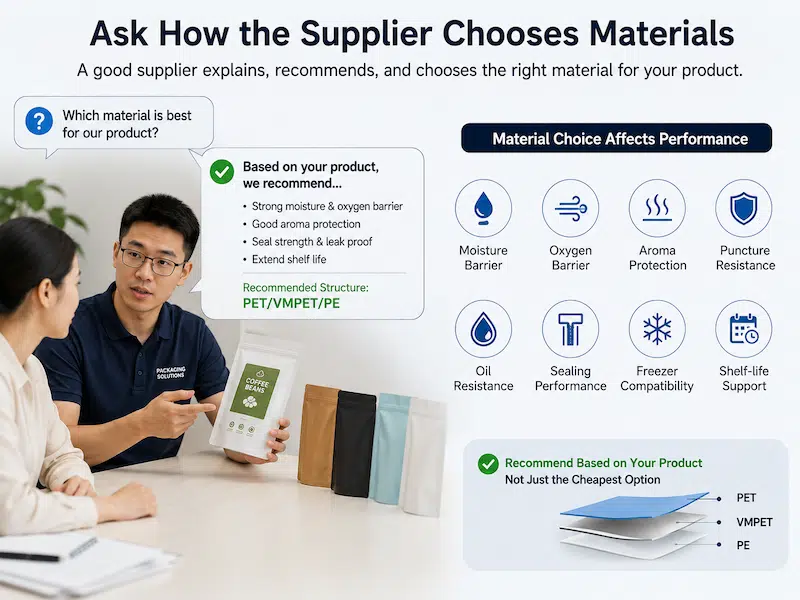
The key question is not whether you know these materials already. The key question is whether the supplier can explain them in a practical way.
A good flexible packaging supplier should explain how material structure affects moisture barrier, oxygen barrier, aroma protection, puncture resistance, oil resistance, sealing performance, freezer compatibility, and shelf-life support.
The supplier should recommend material based on your product first. The supplier should not simply push the cheapest structure. If the supplier cannot explain why a material is suitable, it becomes hard to trust the quotation.
Compare Printing Capabilities
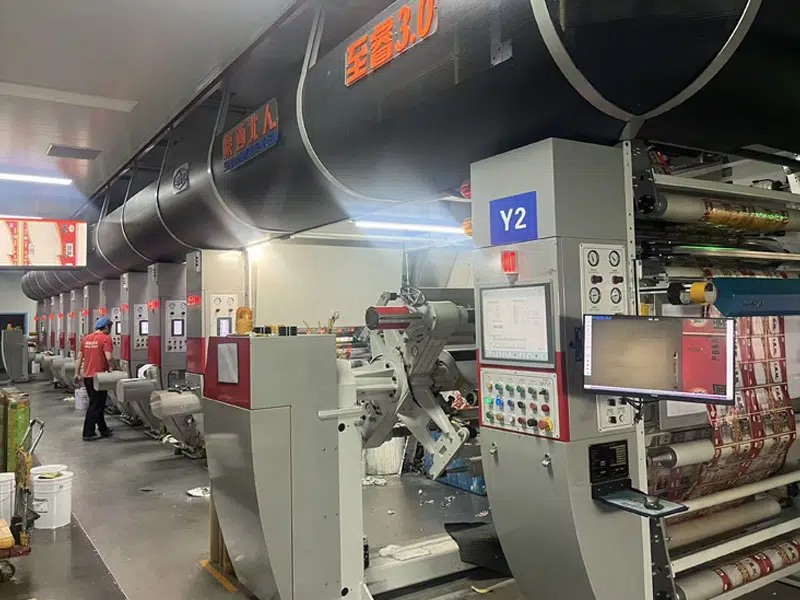
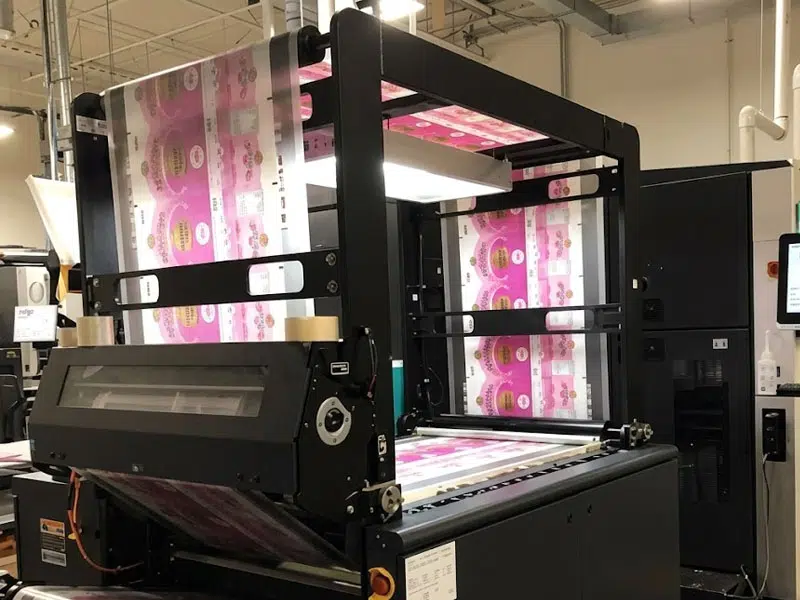
When you are not sure whether digital printing or gravure printing is better for your stand up pouch project, the supplier should help you make a practical choice.
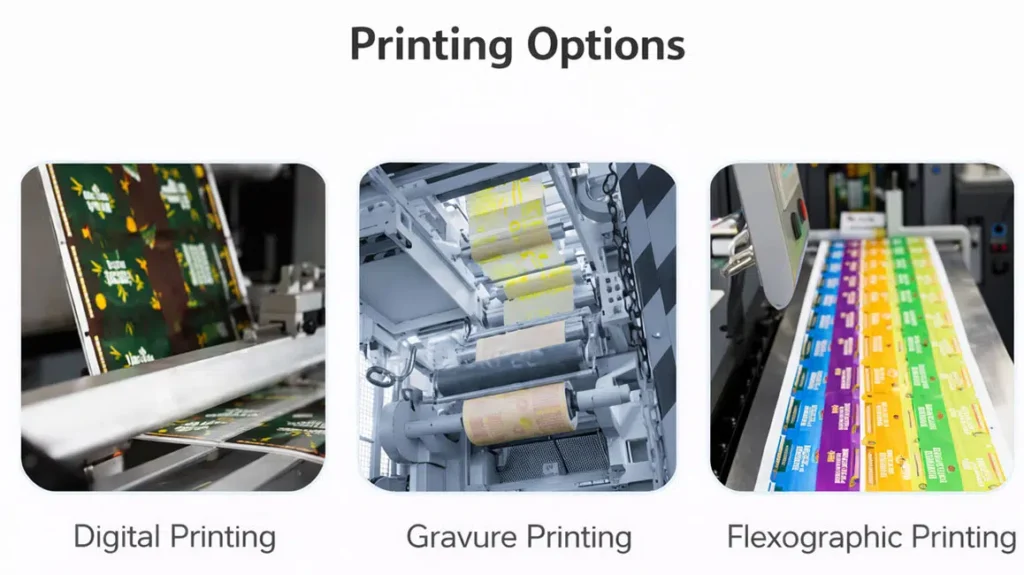
The right printing method depends on several factors, including order quantity, number of designs, color requirements, lead time, budget, and future reorder plans. Digital printing may be a better choice for small orders, multiple SKUs, market testing, or fast sample production. Gravure printing may be more suitable for larger production runs, stable repeat orders, and projects that need lower unit cost at volume.
A reliable pouch manufacturer should not simply ask which printing method you want. The supplier should review your project details first, explain the difference clearly, and recommend the option that fits your real production needs.
| Item | Digital printing | Gravure printing |
|---|---|---|
| Suitable order size | Small to medium runs | Medium to large repeat runs |
| MOQ reference | May start around 500 pcs | Often starts around 10,000 pcs |
| Color performance | Good and flexible for many versions | Very stable for long production runs |
| Cost efficiency | Better for short runs and test launches | Better unit cost at higher volume |
| Lead time | Samples around 2-3 working days; production around 7-15 working days after artwork confirmation | Samples around 2-3 working days; production around 7-15 working days after artwork confirmation |
| Best use case | New launches, small test runs, multiple SKUs | Stable artwork, larger volume, repeat orders |
Exact numbers depend on project details, but the supplier should help you decide based on quantity, artwork versions, and long-term demand.
GCLPacking supports both digital printing and gravure printing, so companies can choose a method that fits the stage of the project.
Check Whether the Supplier Can Guide the Project
Many companies do not know the exact pouch size, material, printing method, or feature they need at the beginning. A good supplier should help turn product information into a practical packaging solution.
The supplier should be able to explain pouch size, bottom gusset, zipper, window, valve, spout, finish, dieline, safe area, barcode position, and printing area in simple language.
If the supplier only asks for finished artwork and exact specifications from the start, the process may become difficult for companies that are still defining the package.
Evaluate Quality Control Before Comparing Price
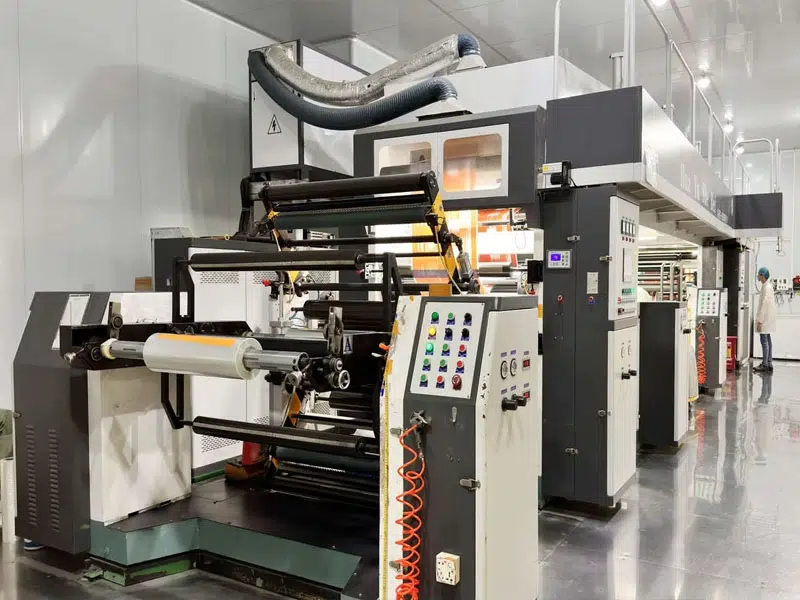
A lower price does not always mean a better choice. Before choosing a pouch manufacturer, ask how the supplier checks sealing strength, zipper function, pouch stability, print quality, color consistency, lamination strength, leak resistance, and sample approval.
Clear quality control matters because many packaging problems appear later as leakage, poor shelf appearance, shipping damage, or inconsistent repeat orders.
Confirm MOQ, Lead Time, and Sample Support
The supplier should clearly explain MOQ, sample options, dieline support, artwork requirements, and production time after artwork approval.
It is also important to ask whether different artwork versions can use the same pouch size and material. This helps reduce confusion when one project includes several SKUs.
GCLPacking can support dieline preparation, sample production, and mass production based on pouch style, material structure, and printing method.
Conclusion
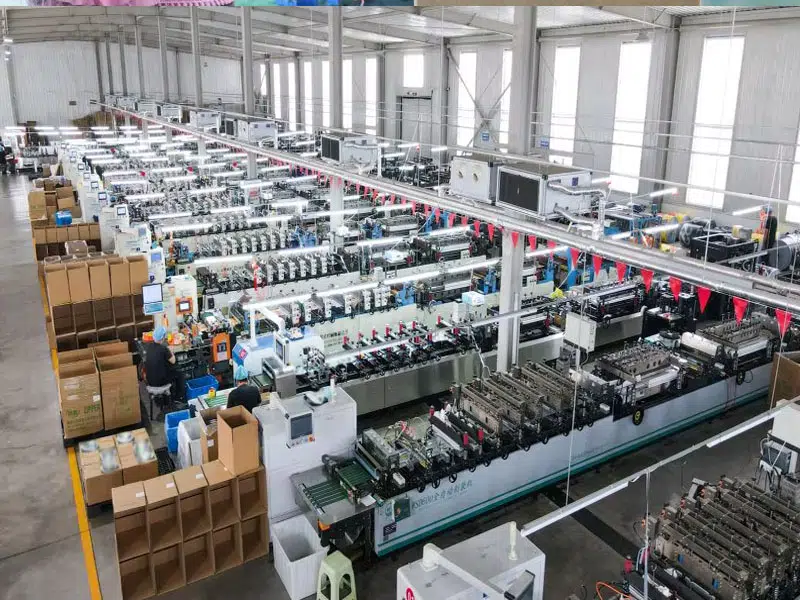
Choosing a stand up pouch manufacturer is not only about finding someone who can produce a bag. It is about finding a supplier that can understand your product, explain your options, recommend a suitable pouch structure, and support stable production over time.
That is especially important when your team does not yet know the right material, pouch style, or printing method. A strong supplier helps you make those decisions with less risk.
GCLPacking supports custom stand up pouch projects with pouch size suggestions, material structure recommendations, digital printing, gravure printing, free dieline support, sample production, and mass production for food, coffee, snacks, powder, pet products, cosmetics, and other flexible packaging needs.
Before requesting a quotation, prepare your product type, fill weight, target shelf life, storage condition, artwork needs, and estimated quantity. This information helps the supplier recommend a more suitable pouch structure and give a more accurate quotation.