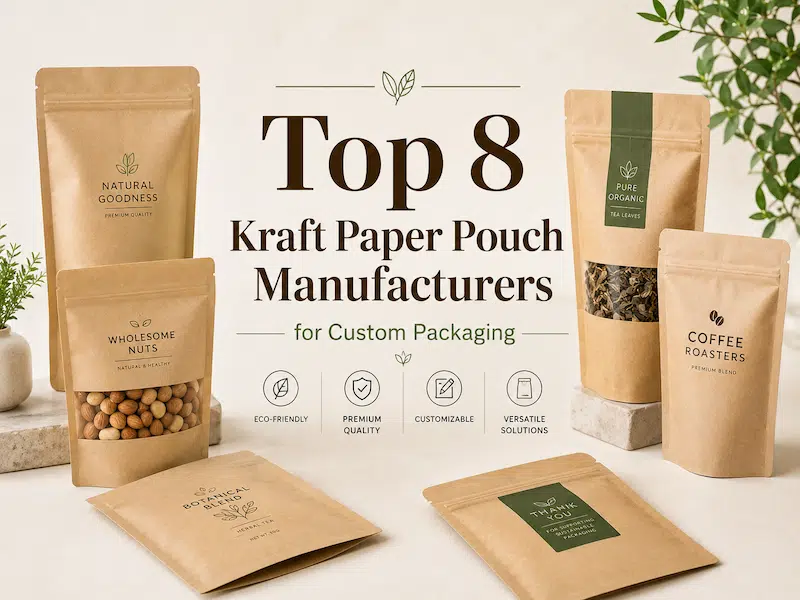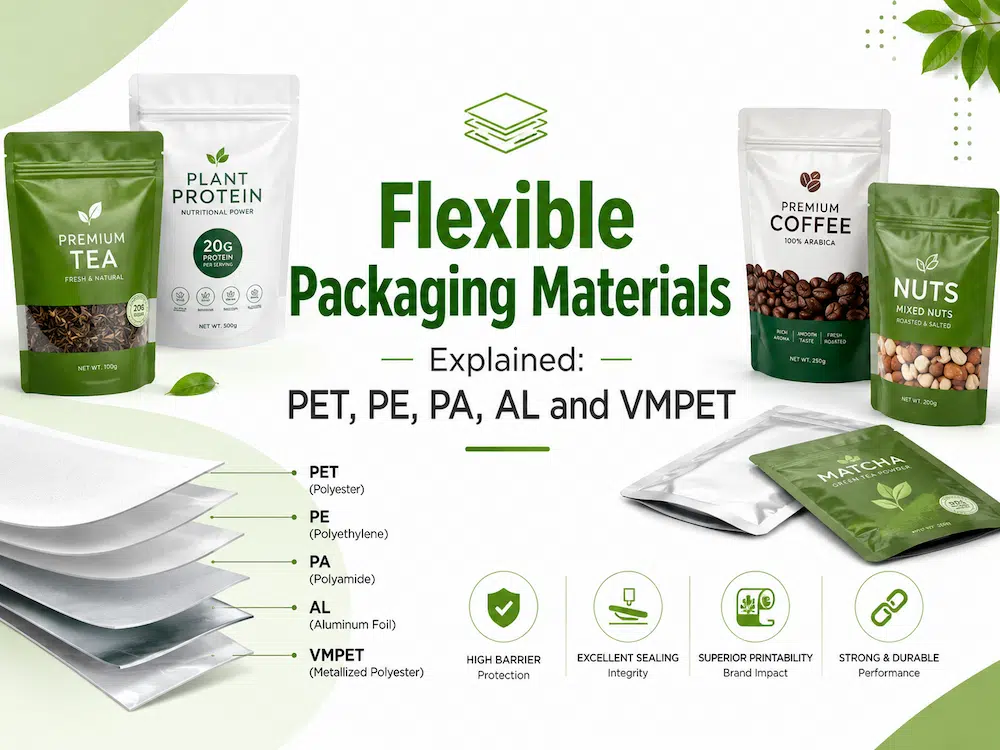

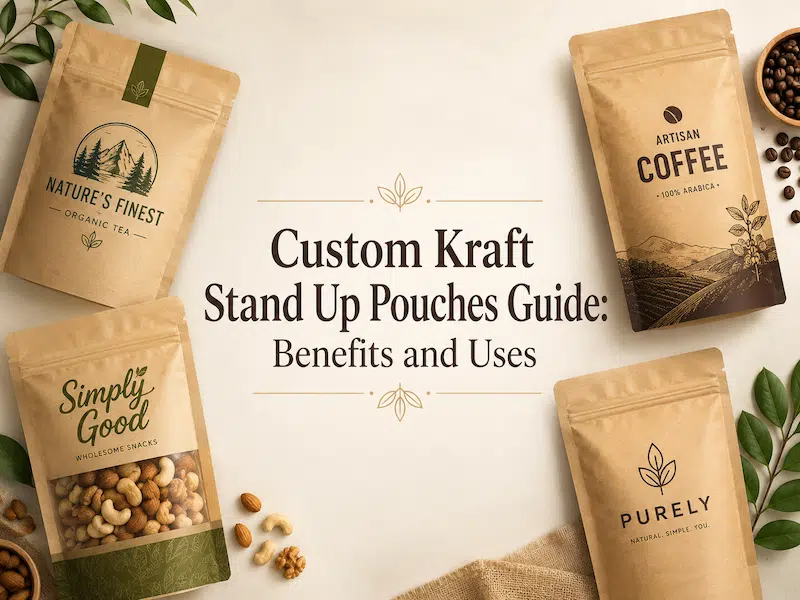
Kraft stand up pouches are often chosen because they make a product feel more natural, approachable, and shelf-ready.
That first impression matters. A kraft pouch can make coffee, tea, granola, nuts, spices, pet treats, powders, and handmade goods feel warmer than a plain plastic package. It also gives the product a practical format: it stands upright, can be resealed, and leaves room for branding or product information.
Still, the paper look is only the beginning. A good kraft stand up pouch also needs the right inner structure, sealing performance, and barrier protection for the product inside.
This guide breaks down where kraft stand up pouches work best, what makes them useful, what the paper surface does not tell you, and how to approach windows, zippers, custom printing, and sustainability claims before placing an order.
The Natural Look Is the Starting Point, Not the Whole Package
Kraft packaging works well when the product has a natural, craft, organic, or ingredient-focused story. For coffee, tea, granola, nuts, spices, and pet treats, kraft stand up pouches can help the product feel closer to its ingredients and more authentic.
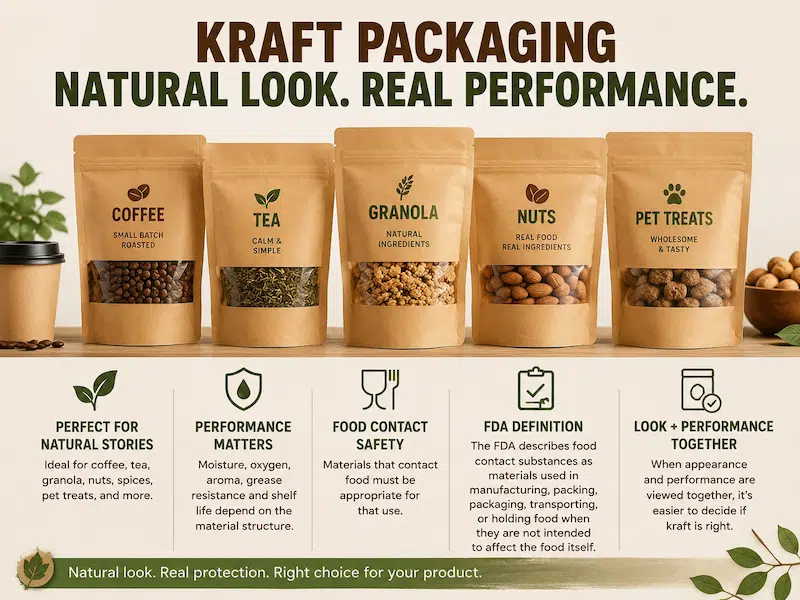
However, the kraft look should not be the only reason to choose it. If the product needs moisture protection, oxygen barrier, aroma retention, grease resistance, or a longer shelf life, the material structure is just as important as the outside appearance.
For food packaging, the materials that contact food must be suitable for that use. The FDA describes food contact substances as materials used in manufacturing, packing, packaging, transporting, or holding food when they are not intended to affect the food itself.
In simple terms, natural-looking packaging still needs to meet real food-contact and product protection requirements. When appearance and performance are considered together, it becomes easier to decide whether kraft is the right choice.
Where Kraft Stand Up Pouches Work Best
Kraft stand up pouches are strongest when the product is dry, shelf-stable, and visually aligned with a natural packaging style.
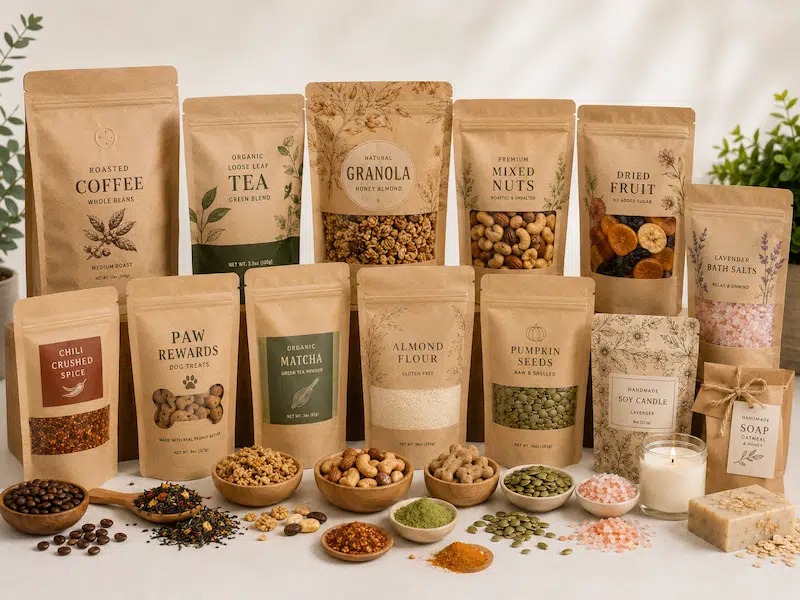
They are commonly used for coffee, tea, snacks, granola, nuts, dried fruit, spices, pet treats, powders, seeds, bath salts, and handmade retail goods. These products often benefit from packaging that looks simple without feeling unfinished.
In practice, kraft pouches tend to make the most sense when the product falls into one of these situations:
- The product is dry or shelf-stable.
- A natural or ingredient-led appearance supports the brand.
- Customers may open and close the pouch several times.
- Product visibility through a window can build trust.
- The pouch needs a simple base for labels or custom printing.
For products such as coffee and spices, aroma protection may be important. For snacks and granola, moisture protection matters. For pet treats, pouch strength and zipper quality should be checked. For powders, the opening size and moisture barrier can affect the user experience.
Liquids, sauces, very oily foods, frozen products, and highly sensitive products require more caution. A kraft look may still be possible, but the pouch structure should be reviewed before production.
After product fit is clear, the benefits of kraft pouches become more meaningful because they can be judged against real packaging needs.
Why Brands Like Kraft Pouches
Brands like kraft stand up pouches because they offer a useful balance between a natural look and practical packaging function.
This natural appearance works especially well for products such as coffee, tea, granola, nuts, dried fruit, spices, pet treats, powders, seeds, bath salts, and handmade retail goods. It helps the product feel simple, ingredient-focused, and more approachable.
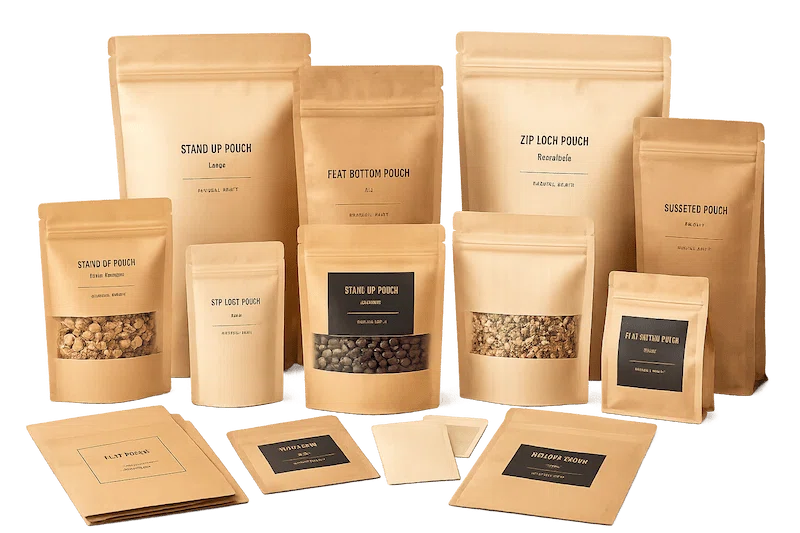
But the appeal is not only about appearance.Stand up pouches also offer practical features that help the package work better in real use. The stand up structure helps the pouch display better on shelves, while a zipper makes it easier to reseal after opening. A clear window can show the product inside, and custom printing can make the pouch look more polished and retail-ready.
This also makes kraft pouches flexible for different business stages. A new product can start with stock kraft pouches and labels to test the market. As the brand grows, custom printed kraft stand up pouches can create a more consistent look for retail, online sales, wholesale, or private label programs.
At the same time, packaging choices are now part of a wider discussion about waste and material responsibility. According to the U.S. EPA, containers and packaging made up 82.2 million tons of municipal solid waste generation in 2018, or 28.1% of total generation. This does not mean every kraft pouch is automatically sustainable, but it does show why brands need to think carefully about material structure, packaging claims, and product protection.
| Benefit | Why it matters |
|---|---|
| Natural shelf appearance | Helps products feel simple, warm, and ingredient-focused |
| Stand up format | Makes the pouch easier to display than a flat bag |
| Zipper and window options | Improves convenience and product visibility |
| Custom printing | Turns a simple pouch into a more complete brand package |
These benefits are strongest when the pouch is built around the product, not only around the look.
A Paper Texture Can Hide a More Complex Structure
Not every kraft paper stand up pouch is built the same way.
In many cases, kraft paper is the outer layer. The inside may include PE, PET, CPP, BOPP, aluminum foil, metallized film, PLA, or other layers depending on what the product needs. These layers help the pouch seal, stand upright, resist moisture, hold aroma, block oxygen, or protect the paper surface from oil.
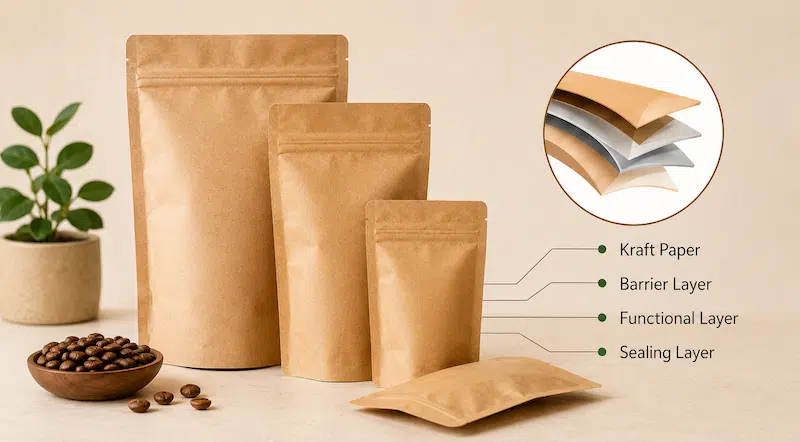
This is why two kraft pouches can look similar but perform very differently.
A tea pouch may only need moderate protection. A kraft coffee pouch may need a high-barrier structure and a degassing valve. A pouch for oily snacks may need grease resistance. A pet treat pouch may need more puncture resistance. A kraft stand up pouch with window needs a clear film section that still fits the overall protection plan.
When GCLPacking reviews a kraft pouch project, the useful starting point is the product inside: what it is, how long it needs to stay fresh, how it will be filled, and how customers will use it after opening.
With the structure defined, the next decision is the kraft style itself.
Brown, White, or Black Kraft Changes the Message
Kraft is not one single look.
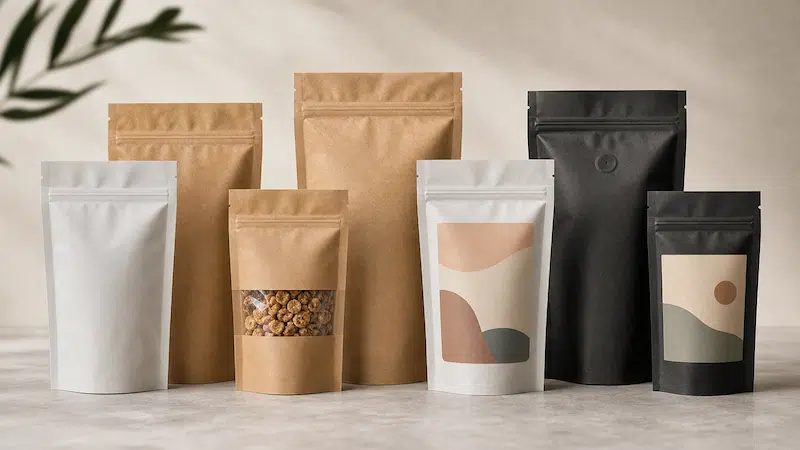
Brown kraft is the classic choice. It feels rustic, natural, and close to the product. It works well for organic snacks, coffee, tea, herbs, granola, nuts, pet treats, and craft-style goods.
White kraft feels cleaner and more minimal. It keeps the paper texture but softens the overall appearance, which can work well for tea, supplements, wellness products, beauty items, and clean-label foods.
Black kraft feels more premium and bold. It can be a strong direction for specialty coffee, premium tea, gift products, or simple high-contrast designs.
The best choice depends on the product position. A kraft pouch can feel handmade, modern, natural, or premium depending on the color, artwork, and finish.
Color sets the tone, but the next choice often determines how much confidence customers feel before they buy: whether they can see the product inside.
A Window Builds Trust When the Product Deserves to Be Seen
A window can make kraft packaging more persuasive because customers can see the real product inside.
This works well for tea leaves, granola, nuts, dried fruit, candy, pet treats, spices, bath salts, and other dry products with visible color or texture. Instead of relying only on the label, customers can quickly understand what they are buying.
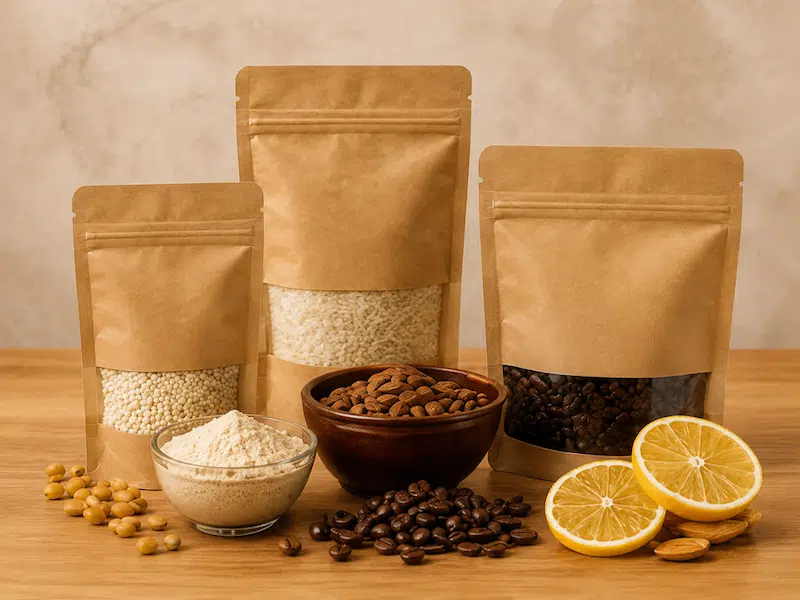
But a window also reduces printable space and may affect barrier performance. For coffee, powders, light-sensitive products, or products that need stronger protection, a fully covered pouch may be a better choice.
If you choose a kraft stand up pouch with window, the window should feel intentional. It should support the product story without taking over the whole design.
The Best Features Are the Ones Customers Actually Use
A kraft pouch should look good before purchase and work well after purchase.
For products used over several days or weeks, a resealable zipper is often one of the most valuable features. It helps customers close the pouch after opening and keeps the product easier to store.
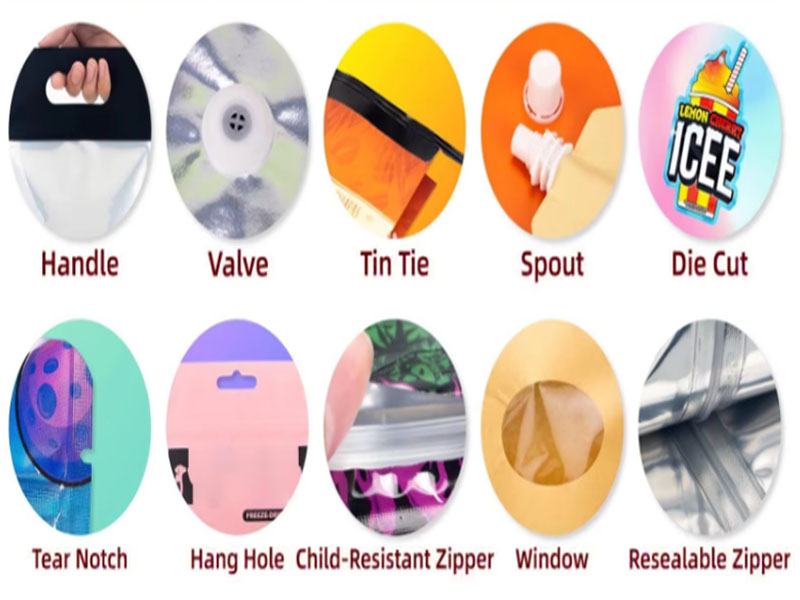
A heat-sealable top protects the product before first opening. A tear notch makes the pouch easier to open. A degassing valve is important for freshly roasted coffee. A hang hole can help with peg display. Rounded corners can make the pouch feel more finished.
These details are not just add-ons. They affect filling, sealing, display, storage, and customer satisfaction.
After the functional details are planned, sustainability claims should be treated with the same care as material and barrier choices.
Kraft Looks Responsible, But Claims Need Proof
Kraft packaging often looks eco friendly, but appearance alone is not enough.
Many kraft stand up pouches include laminated inner layers so the pouch can seal and protect the product. Those layers may affect recyclability or compostability. If a product needs barrier protection, the structure may be more complex than customers expect.
This does not mean kraft is a poor choice. It means the claim should be accurate. Instead of using broad language such as “100% eco friendly,” it is better to describe the actual material structure and disposal conditions. A pouch might have a kraft paper exterior, a recyclable structure where accepted, a compostable material under certified conditions, or a plastic-reduced format compared with a previous package.
Responsible packaging should protect the product well enough to prevent waste while supporting realistic material goals.
Once the pouch structure and claims are clear, custom printing can turn the kraft surface into a stronger brand asset.
Custom Printing Turns Kraft Into a Brand Package
Custom printed kraft stand up pouches are useful when a product needs more than a label on a blank pouch.
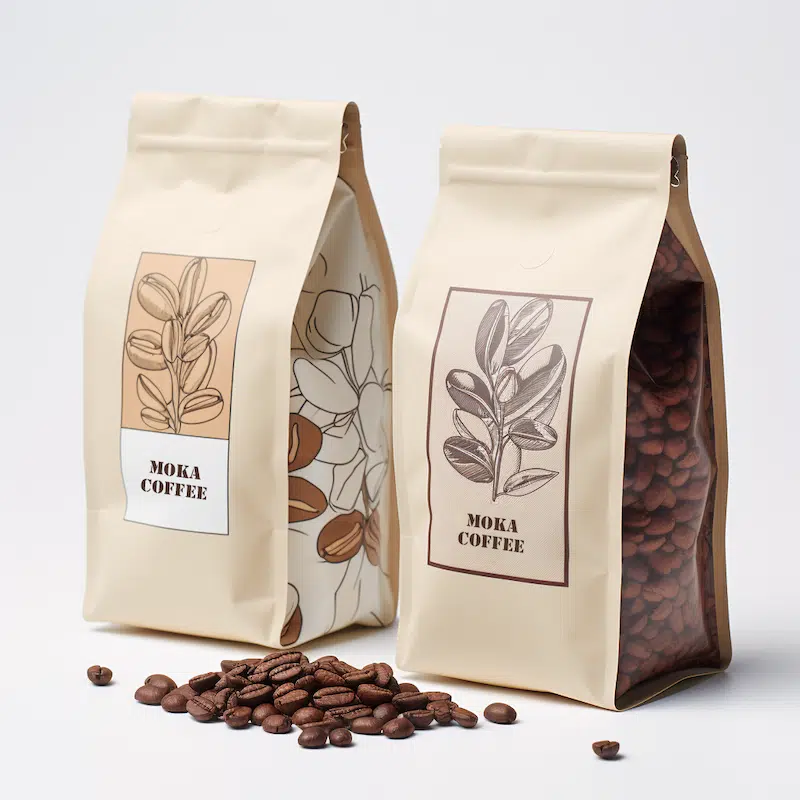
Printing directly on the pouch gives more control over the logo, product name, flavor system, barcode, ingredient information, instructions, and brand story. It also makes the packaging feel more consistent across retail shelves, online listings, subscription boxes, wholesale programs, and private label lines.
Kraft texture affects print results. Dark ink, high-contrast logos, clean typography, and simple illustrations usually work well. Pale colors and fine details may be harder to see on brown kraft. If color accuracy is important, white ink or a different material direction may be worth discussing before production.
For multiple flavors or sizes, the design system should be planned early. Keep the layout consistent, then use color, product names, or small artwork changes to separate each version.
The cleanest custom printed kraft pouches usually follow a simple design rule:
- Make the product name easy to read.
- Keep the logo high contrast.
- Use colors that work with the kraft background.
- Leave enough space for barcode, ingredients, and required details.
- Confirm the dieline before final artwork.
When those details are handled early, the final step is choosing the right pouch specification for production.
Start With the Product Before Choosing the Pouch
The safest way to order kraft stand up pouches is to begin with the product requirements.
Start with the product type, fill weight, product condition, and shelf life target. Then decide whether the product needs moisture, oxygen, aroma, grease, or light protection. After that, choose the kraft color, window, zipper, valve, heat seal, or hang hole.
Once the structure is clear, artwork can be prepared on the correct dieline. This order helps avoid a common problem: choosing a pouch that looks right but does not perform well enough for the product.
Before asking for a quote, prepare the product type, fill weight, product condition, preferred pouch style, shelf life needs, artwork status, and order plan. If you do not know the right structure yet, GCLPacking can help narrow the options based on how the product will be filled, shipped, displayed, and used.
Final Thoughts
Kraft stand up pouches work best when the natural look supports the product and the structure still meets the product’s protection needs.
They can make dry goods, coffee, tea, snacks, pet treats, powders, and handmade products feel more approachable and shelf-ready. But the best result comes from looking beyond the paper surface. Barrier needs, heat sealing, zipper quality, window placement, food contact suitability, custom printing, and sustainability claims all deserve attention.
When those details are planned well, kraft stand up pouch packaging can look simple on the outside while still performing reliably where it matters.