
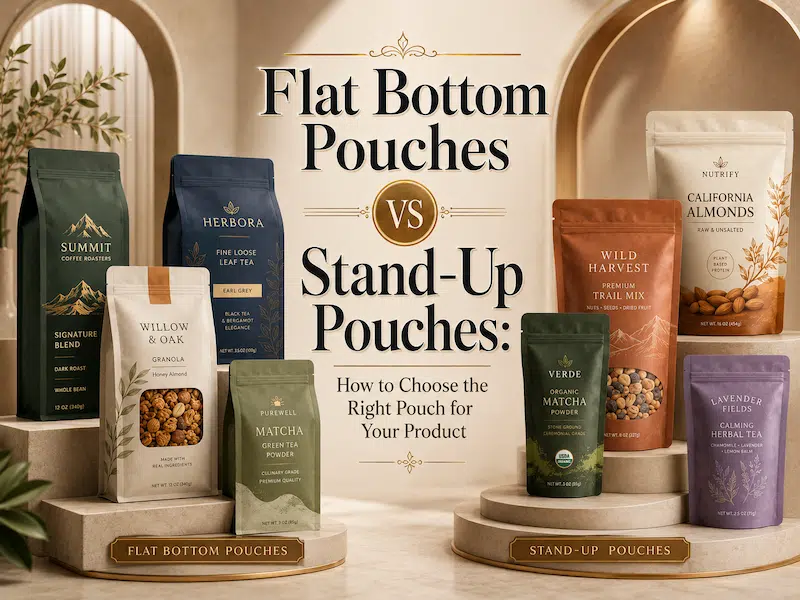
What Are Flat Bottom Pouches?
A flat bottom pouch has a front panel, back panel, two side gussets, and a flat bottom panel.
After filling, it forms a more box-like shape. This structure helps the pouch stand firmly and maintain a cleaner outline on the shelf.
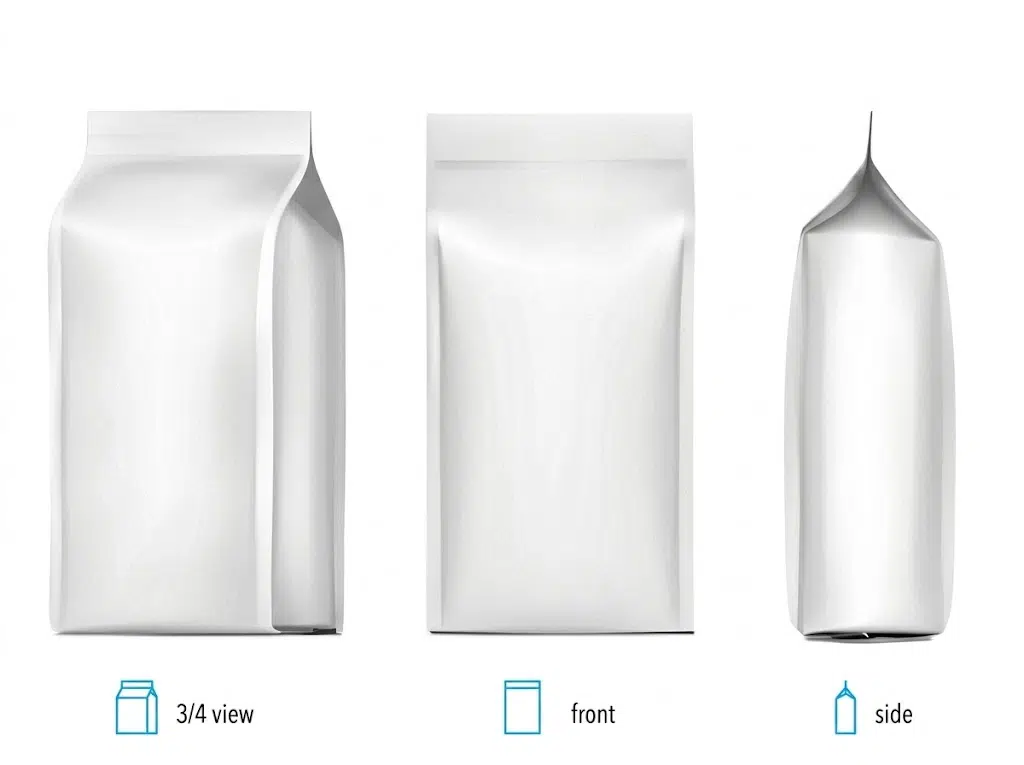
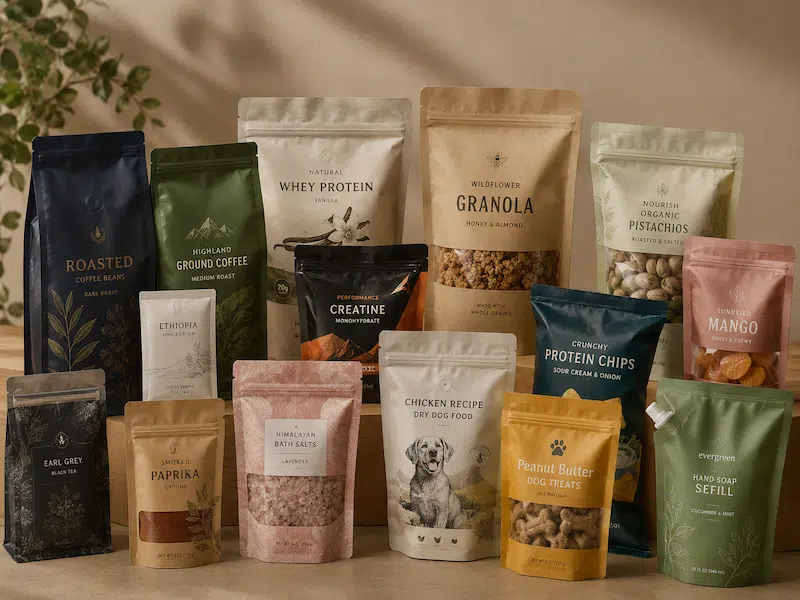
Flat bottom pouches are commonly used for coffee beans, ground coffee, granola, nuts, pet food, protein powder, dry mixes, rice, grains, and other products where the filled pack needs both structure and display value.
Many brands choose a flat bottom pouch when they want stronger visual impact and better pack stability.
The structure also gives you more usable print area because you can place branding and product information across the front, back, and side panels.
In many retail settings, this pouch shape creates neater shelf rows and a more premium presentation.
What Are Stand-Up Pouches?
Stand-up pouch uses a bottom gusset that expands after filling. It usually includes a front panel, a back panel, and one bottom gusset. The structure is simpler, lighter, and highly versatile.
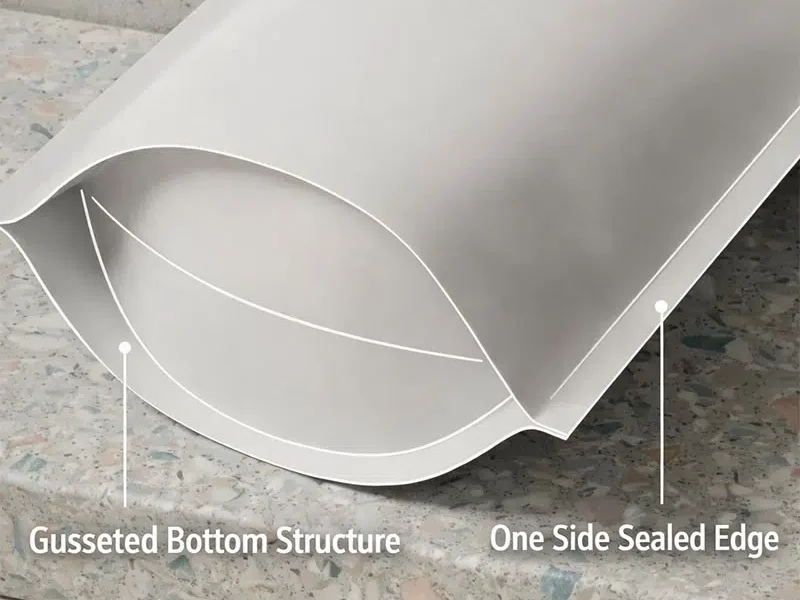
Stand-up pouches are commonly used for snacks, supplements, powders, gummies, tea, spices, pet treats, bath salts, dried fruit, small dry foods, and sample packs.
Many product lines use a stand-up pouch because it adapts well to a wide range of pack sizes.
It is often a practical choice for product launches, short-run SKU expansion, refill formats, and ecommerce packing. It also gives a clean front-facing presentation while keeping the pack structure relatively efficient.
Quick Decision Guide
Before you go into detailed specifications, it helps to start with common packaging situations.
The table below gives you a practical starting point. It does not replace product testing, but it helps you narrow the direction faster.
| Situation | Better Starting Choice | Why |
|---|---|---|
| Small product launch | Stand-up pouch | You can start with a more flexible structure and usually lower packaging cost |
| Premium retail product | Flat bottom pouch | The pouch looks more structured and gives stronger shelf impact |
| Coffee beans | Flat bottom pouch | The shape supports valves well and usually presents better at retail |
| Protein powder | Depends | Product density and fill size decide whether extra base stability is necessary |
| Multi-flavor product line | Stand-up pouch | This structure often works well for multiple SKUs and simpler planning |
| Ecommerce product | Stand-up pouch | It is often easier to store, pack, and ship |
| Heavy dry food | Flat bottom pouch | The pouch usually stands more steadily with heavier fills |
| Budget-sensitive project | Stand-up pouch | The structure is usually more economical |
| Product needing more branding space | Flat bottom pouch | The side gussets add more room for print content |
What Is the Real Structural Difference?
The visual difference is easy to see, but the practical difference matters more. Structure affects standing stability, shelf shape, print layout, and filling performance. When you compare the two formats closely, a few patterns appear.
Bottom Structure and Standing Stability
A stand-up pouch uses one bottom gusset. A flat bottom pouch uses a defined bottom panel with side gussets. Because of that difference, a flat bottom pouch often stands more firmly after filling.
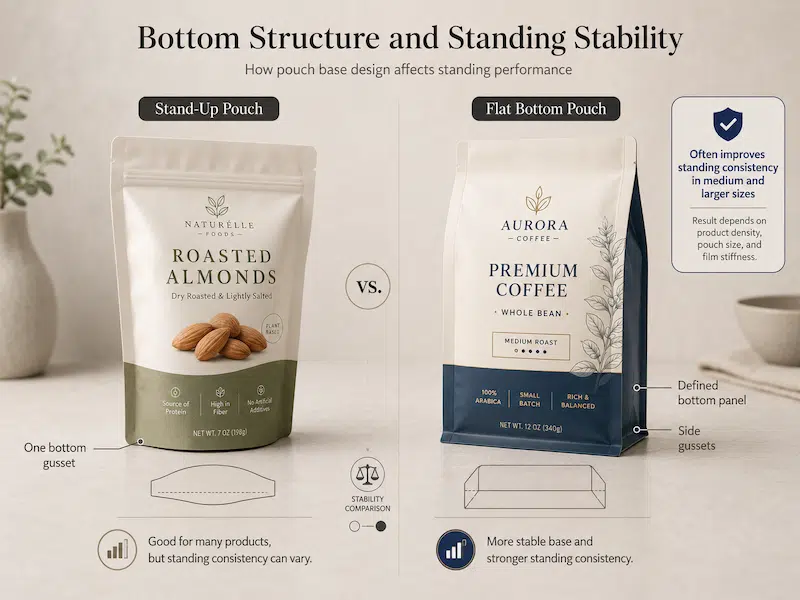
In many dry product applications, a flat bottom pouch can improve standing consistency by around 15% to 30% compared with a similar stand-up pouch, especially in medium and larger sizes. The exact result depends on product density, pouch dimensions, and film stiffness.
Printable Area
A flat bottom pouch usually gives you more usable print area. In many standard sizes, it can provide about 10% to 20% more total printable surface because of the extra side panels. That added space helps when you need room for flavor details, instructions, origin story, certifications, and compliance information.
Shelf Shape
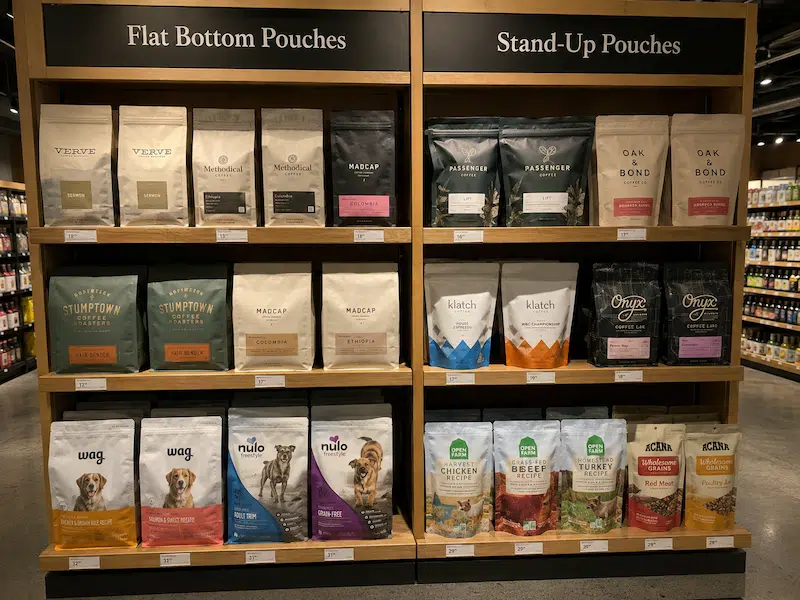
A flat bottom pouch usually creates straighter lines and more uniform shelf rows. A stand-up pouch often looks softer and more flexible. For premium categories such as coffee and pet food, that structured appearance can make a visible difference in retail presentation.
Filling Behavior
A stand-up pouch often works well for lighter fills and products with moderate volume. A flat bottom pouch often performs better when the product is heavier, denser, or sold in a pack that needs stronger visual structure after filling.
Product Fit: Which Pouch Works Better for Different Products?
Different products settle in different ways. Some products are dense and compact. Others are bulky, airy, or irregular. That is why product category alone cannot decide the final pouch. Still, product type gives you a useful starting point.
| Product Type | Better Starting Choice | Reason |
|---|---|---|
| Coffee beans | Flat bottom pouch | The pouch stands well, looks premium, and works well with a valve |
| Ground coffee | Flat bottom pouch | The structure supports stable shelf display and clean graphics |
| Coffee samples | Stand-up pouch | Small fills often fit this format more naturally |
| Protein powder | Depends | Density and fill size can shift the better option |
| Supplement powder | Stand-up pouch | Small and medium sizes often work well in this structure |
| Granola | Flat bottom pouch | Bulkier fill often benefits from a stronger base |
| Nuts | Flat bottom pouch | The pouch gives good shelf presence and stable standing |
| Dried fruit | Depends | Product shape and volume can change the better fit |
| Snacks | Stand-up pouch | Lighter products often suit this flexible format |
| Pet treats | Stand-up pouch | Smaller packs often work well in this structure |
| Pet food | Flat bottom pouch | Heavier fills usually need better bottom support |
| Tea | Stand-up pouch | Light fills and compact sizes often fit well |
| Spices | Stand-up pouch | Small pouch sizes are common and efficient |
| Bath salts | Depends | Density and shelf appearance both matter |
| Refill products | Stand-up pouch | This format often works better for storage and shipping |
Cost, MOQ, and Production Factors
If you compare the two structures only on cost, the stand-up pouch usually starts lower. The flat bottom pouch usually costs more because it has a more complex structure and requires more converting steps.
To help you build a realistic expectation, a flat bottom pouch often costs about 10% to 30% more than a comparable stand-up pouch with a similar size, material family, and print coverage.
In premium structures with valves, thicker films, special finishes, or lower quantities, the gap can become larger.
Your final cost usually depends on:
- pouch structure
- pouch size
- material structure
- film thickness
- printing method
- order quantity
- zipper
- valve
- window
- hang hole
- matte or gloss finish
- artwork complexity
- sample requirements
MOQ also affects your decision.
If you are launching several flavors or testing a new line, a stand-up pouch often gives you an easier starting point.
If shelf image matters more and you want a stronger retail presentation, the extra cost of a flat bottom pouch can make sense.
Contact us to get a custom packaging solution that best fits your product, budget, and market needs.
Shelf Display vs Ecommerce
Retail Shelf
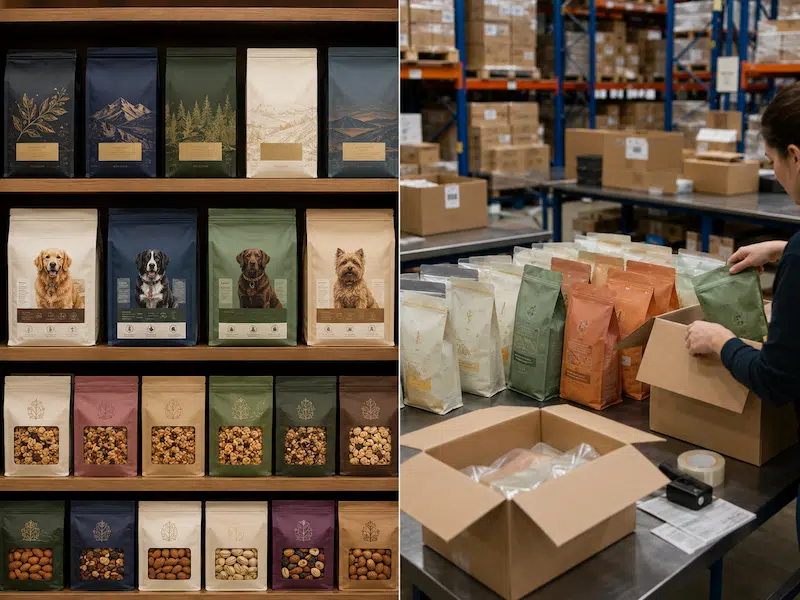
If your product will compete on a retail shelf, a flat bottom pouch often gives you cleaner rows, better front-facing presentation, and more structured branding space. This advantage is especially clear in coffee, pet food, granola, and nut products.
Ecommerce
If your product will move mainly through ecommerce, a stand-up pouch often gives you more flexibility in storage, bundling, carton packing, and SKU management. A flat bottom pouch can still work very well online, especially for premium products, but it may require more careful outer carton planning.
If your team is reviewing shipping performance, it is also useful to look at general ecommerce packaging guidelines when planning pouch dimensions and transit cartons.
Branding, Printing, and Functional Features
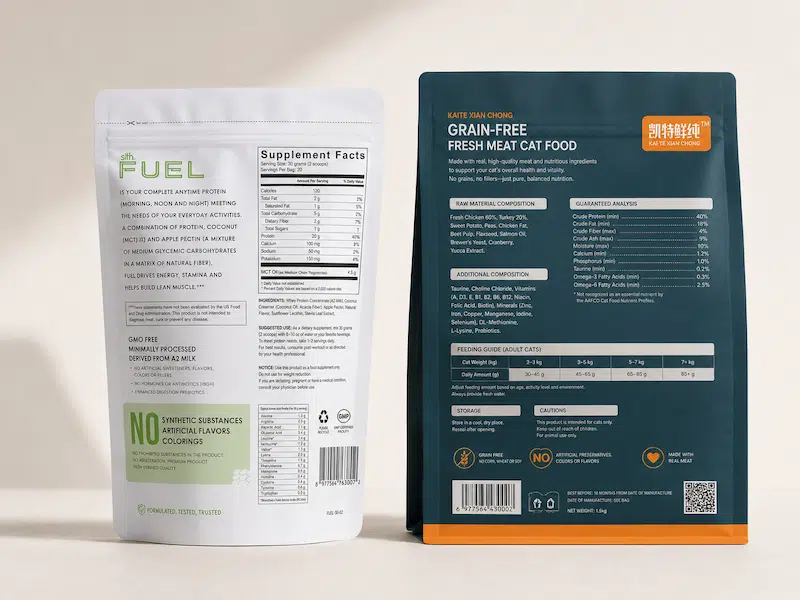
Packaging design needs space, but it also needs structure. A flat bottom pouch usually gives you more organized room for product story, flavor notes, usage instructions, nutrition facts, barcode, certifications, and origin information.
A stand-up pouch still works very well when the front and back panels can communicate the product clearly. For many products, especially smaller packs, that layout is enough.
Both pouch types can include useful features such as:
- zipper
- tear notch
- degassing valve
- clear window
- hang hole
- spout
- rounded corners
- matte finish
- gloss finish
- kraft look
- full-color printing