
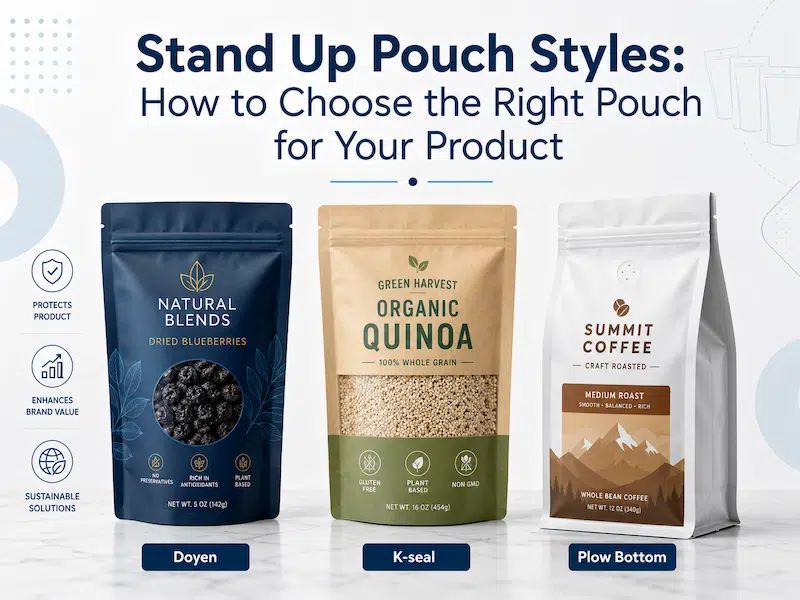
Choosing the right stand up pouch styles can affect how your product looks, how it stands, how it protects the contents, and how customers use it after purchase.
A pouch is not only a printed bag. Its bottom structure, material, zipper, spout, window, and sealing performance all influence the final packaging result.
This guide explains the most common stand up pouch styles, their features, suitable applications, and the key points brands should check before starting a custom pouch project.
What Is a Stand Up Pouch?
Before comparing different styles, it is helpful to understand why stand up pouches are widely used in flexible packaging.
A stand up pouch is a flexible bag with a bottom gusset that allows it to stand upright when filled. This makes it suitable for retail shelves, e-commerce packaging, food packaging, pet food packaging, coffee packaging, powder packaging, and many other product categories.
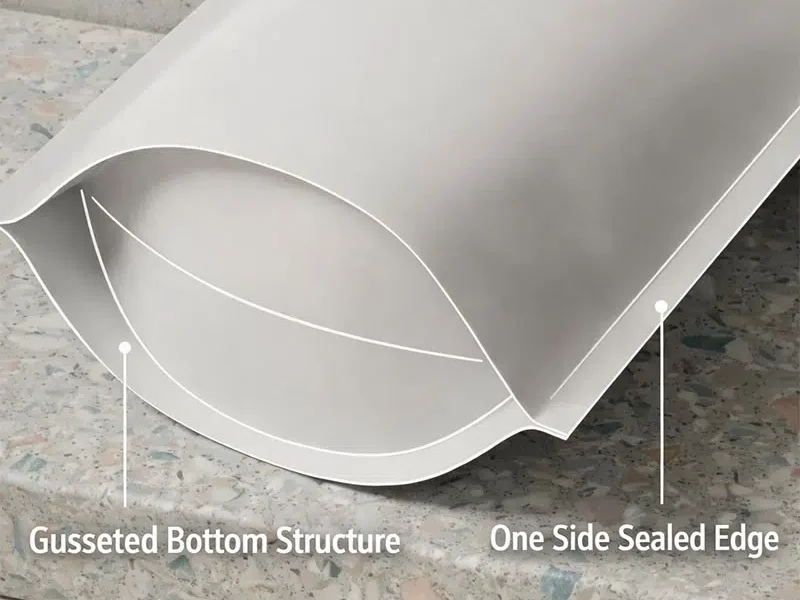
Compared with flat pouches, stand up pouches offer better shelf visibility. Compared with rigid packaging, they are usually lighter, easier to ship, and more flexible for custom printing and sizing.
Common stand up pouch applications include:
- Coffee and tea
- Snacks and nuts
- Pet food and pet treats
- Powder products
- Liquid products
- Supplements
- Personal care products
- Household refill products
However, different products need different pouch structures. That is why choosing the right style matters.
Stand Up Pouch Styles Comparison
This quick comparison helps connect each pouch style with its main advantage and suitable application. It can help brands narrow down the options before discussing size, material, printing, and cost.
Pouch Style | Main Advantage | Suitable Products | Key Concern |
Doyen Pouch | Simple and cost-effective | Snacks, tea, small food packs | Not ideal for heavy products |
K-Seal Pouch | Better bottom support | Coffee, powders, pet treats | Size and filling volume need testing |
Plow Bottom Pouch | Stronger base for heavier products | Rice, flour, pet food, bulk products | May be unnecessary for light products |
Flat Bottom Pouch | Premium shelf appearance | Coffee, pet food, premium snacks | Higher cost than standard pouches |
Zipper Pouch | Better user convenience | Snacks, coffee, powders | Zipper position and powder contamination |
Spout Pouch | Easy pouring and dispensing | Liquids, sauces, refills | Leak resistance and spout compatibility |
Window Pouch | Shows product inside | Tea, nuts, dried fruit | May reduce barrier performance |
Shaped Pouch | Strong shelf differentiation | Kids’ products, cosmetics, promotions | Tooling cost and filling practicality |
Main Stand Up Pouch Styles
The main difference between stand up pouch styles is not only the outside shape. The bottom structure, sealing method, functional accessories, and material choice all affect how the pouch performs.
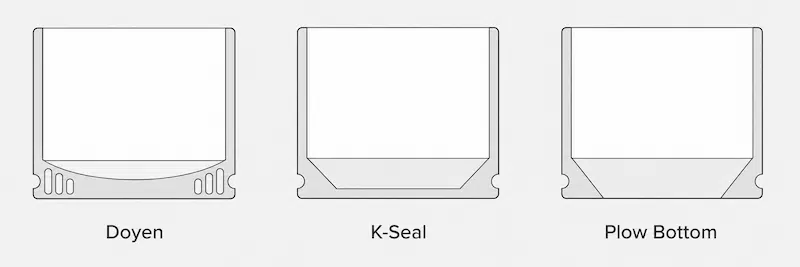
Some styles are better for lightweight snacks. Some are more suitable for heavy products. Some are designed for liquids. Some focus on shelf display, while others focus more on convenience or product protection.
Below are the most common types.
Doyen Stand Up Pouch
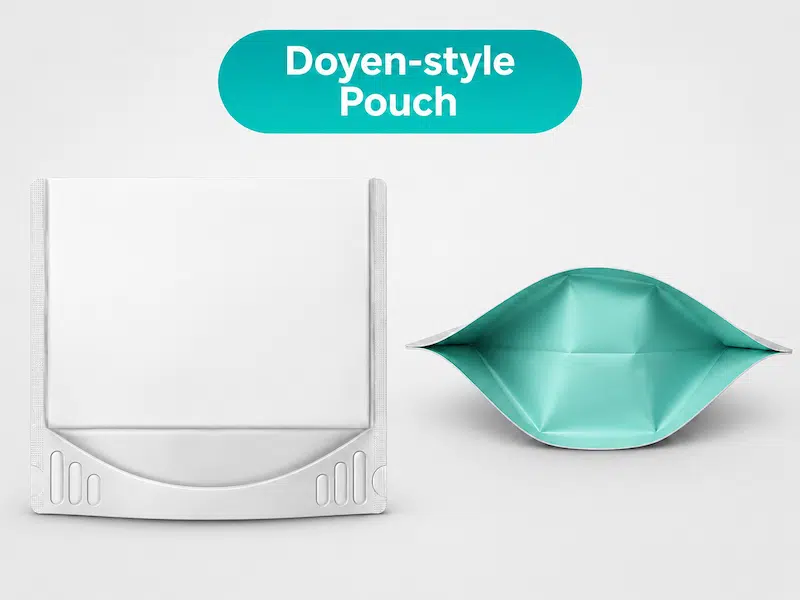
The Doyen pouch is one of the most common and classic stand up pouch styles. It is also called a round bottom pouch or Doypack.
This pouch has a rounded bottom gusset that helps the bag stand after filling. It is often used for lightweight to medium-weight products.
Best for:
- Snacks
- Tea
- Candy
- Dried fruit
- Nuts
- Small coffee packs
- Supplements
- Lightweight powders
The main advantage of a Doyen pouch is its simple and clean appearance. It gives products a professional shelf look without making the structure too complicated.
For many brands, this is a practical starting point because it balances cost, appearance, and function.
However, it may not be the best option for heavy or dense products. If the product weight is too high, the pouch may not stand as firmly, and the bottom may not provide enough support.
Good choice when:
You need a simple, cost-effective stand up pouch for lightweight retail products.
Be careful when:
The product is heavy, dense, or requires strong bottom stability.
K-Seal Stand Up Pouch
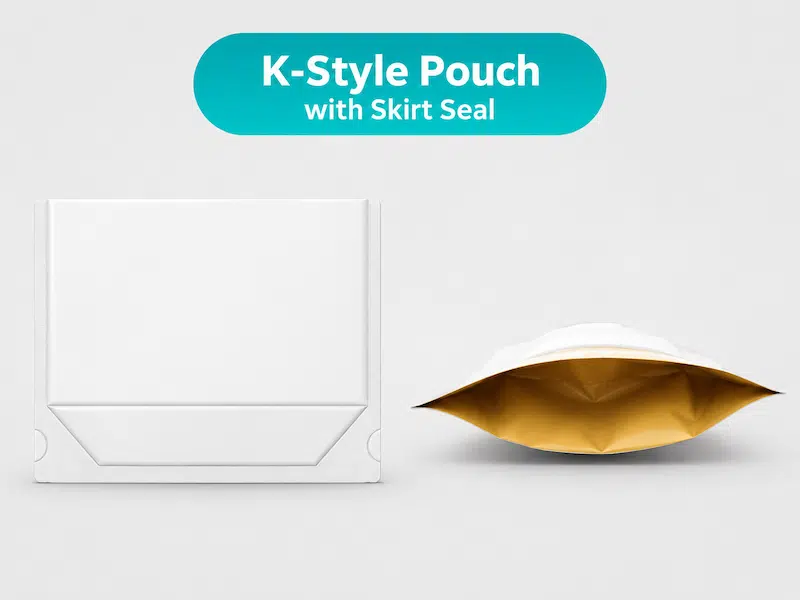
A K-seal pouch is designed with angled seals at the bottom. This structure helps distribute product weight more evenly.
This style is often selected when the product needs better bottom support than a standard round bottom pouch.
Best for:
- Coffee beans
- Protein powder
- Pet treats
- Granola
- Seeds
- Dry food products
- Medium-weight powders
The K-seal structure helps the pouch stand more firmly after filling. It is suitable for products that have more weight or volume but still need a flexible pouch format.
For brands, K-seal pouches offer a good balance between shelf stability and production cost. They are not as box-like as flat bottom pouches, but they usually provide better support than basic Doyen pouches.
Good choice when:
Your product is heavier than a small snack pack, but you still want a standard stand up pouch shape.
Be careful when:
The product has sharp edges, high density, or requires extra puncture resistance.
Plow Bottom Stand Up Pouch
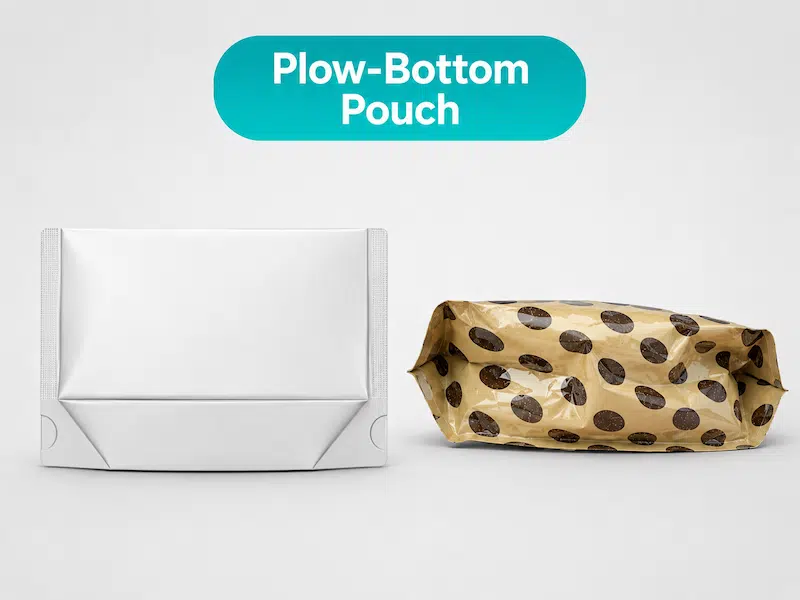
A plow bottom pouch is often used for heavier or bulkier products. The bottom structure allows the product to sit more directly at the base of the pouch.
This gives the pouch better capacity and stronger standing support.
Best for:
- Rice
- Flour
- Pet food
- Coffee beans
- Large powder packs
- Seeds
- Grains
- Bulk dry food products
For heavy products, the bottom structure is very important. A pouch may look large enough, but if the bottom is not suitable, it may lean, wrinkle, or lose stability after filling.
The plow bottom style helps create a stronger base for dense products.
Good choice when:
The product is heavy, bulky, or needs stronger bottom support.
Be careful when:
The product is lightweight. In that case, this structure may add unnecessary cost.
Flat Bottom Pouch
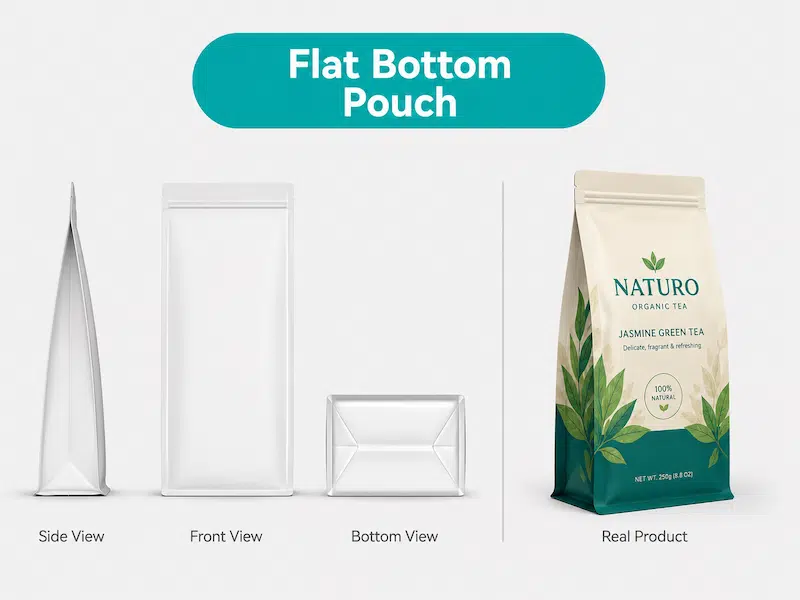
Flat bottom pouches are also called box pouches or eight-side seal pouches. They have a flat base and side gussets, giving the pouch a more structured and premium appearance.
This style is popular when brands want stronger shelf impact and more printable space.
Best for:
- Coffee
- Pet food
- Premium snacks
- Granola
- Protein powder
- Specialty food products
- Retail products that need stronger branding
A flat bottom pouch stands very well on shelves. It also offers more branding areas, including the front, back, side panels, and sometimes the bottom.
For premium retail packaging, this structure can make the product look more stable and valuable.
However, flat bottom pouches are usually more complex to produce than standard stand up pouches. They may cost more, so they are better suited for products where shelf appearance and brand positioning matter.
Good choice when:
Shelf appearance, stability, and premium branding are important.
Be careful when:
The product is price-sensitive or does not need a premium structure.
Functional Stand Up Pouch Styles
After choosing the basic pouch structure, brands also need to consider functional features. These features affect how customers open, use, store, pour, or view the product.
A functional feature should not be added only because it looks good. It should solve a real product or user problem.
Zipper Stand Up Pouch
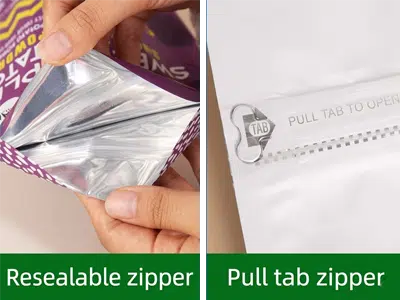
A zipper stand up pouch includes a resealable zipper. It allows customers to open and close the pouch after purchase.
This is one of the most useful features for products that are not used all at once.
Best for:
- Coffee
- Tea
- Snacks
- Nuts
- Pet treats
- Powder products
- Supplements
- Dried fruit
A zipper improves user experience because customers can keep the product inside the original pouch after opening. It also helps support freshness and convenience.
For powder products, zipper position should be checked carefully. Powder may enter the zipper track and affect resealing. For machine filling, the top space above the zipper also needs to match the sealing process.
Good choice when:
The product needs repeated opening and closing.
Be careful when:
Powder, oil, or small particles may contaminate the zipper or sealing area.
Spout Stand Up Pouch
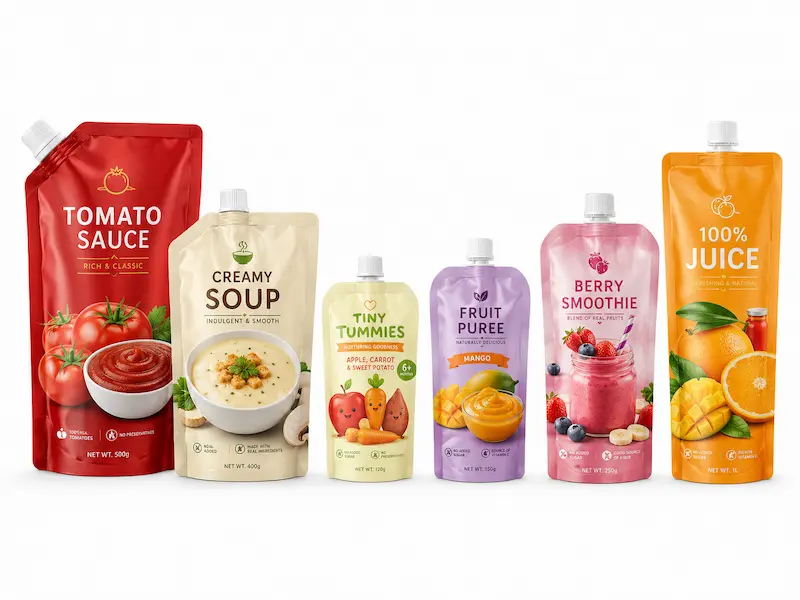
A spout stand up pouch includes a spout and cap for pouring, squeezing, or dispensing the product. This style is commonly used for liquid and semi-liquid products.
Best for:
- Juice
- Sauce
- Baby food
- Puree
- Detergent
- Shampoo refill
- Liquid supplements
- Personal care products
For liquid packaging, leak resistance is the key point. The pouch must have suitable material, strong sealing, proper spout welding, and enough drop resistance.
The spout size should also match the product. Thin liquids may use smaller spouts, while thicker products may need a larger opening.
Good choice when:
The product needs pouring, squeezing, or controlled dispensing.
Be careful when:
The product is thick, oily, acidic, or requires high-temperature filling.
Window Stand Up Pouch
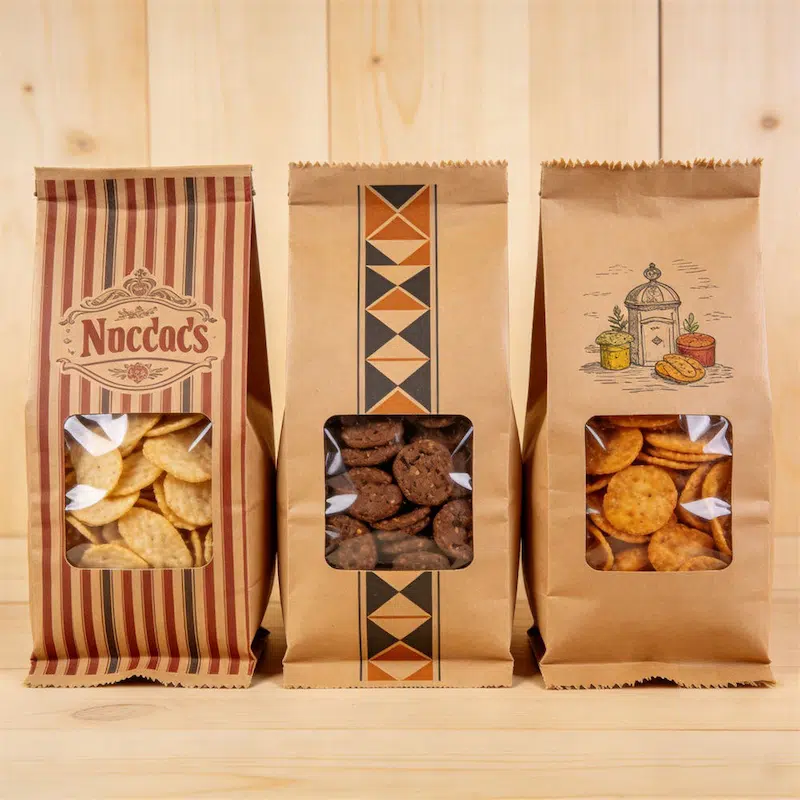
A window pouch has a transparent area that allows customers to see the product inside.
This style is useful when the product appearance can help build trust.
Best for:
- Tea
- Nuts
- Candy
- Dried fruit
- Granola
- Pet treats
- Natural food products
A clear window can make the packaging feel more transparent and honest. It allows customers to see the texture, color, and quality of the product before buying.
But the window should be designed carefully. For products sensitive to oxygen, moisture, or light, a large window may reduce protection performance.
Good choice when:
The product itself helps customers make a buying decision.
Be careful when:
The product needs strong light, oxygen, or moisture protection.
Shaped Stand Up Pouch
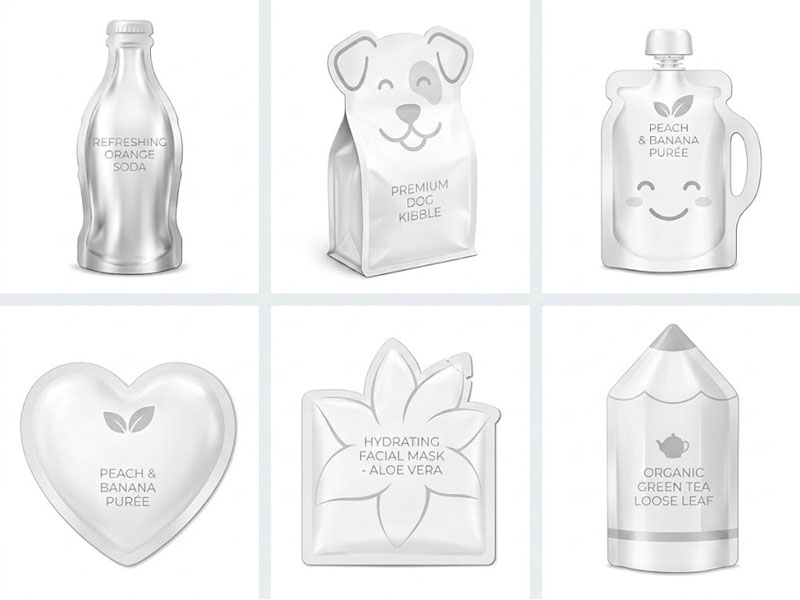
A shaped pouch uses a custom outline to create a more unique visual effect.
This style is often used when brands want stronger shelf differentiation.
Best for:
- Kids’ snacks
- Beverages
- Cosmetics
- Personal care products
- Promotional products
- Seasonal products
- New product launches
A shaped pouch can make the product easier to notice. It can also help express brand personality.
However, the shape must still be practical. If the pouch is difficult to fill, seal, pack, or display, the creative design may create problems later.
Good choice when:
The brand needs a more distinctive package shape.
Be careful when:
The custom shape affects filling efficiency, seal strength, or shelf stability.
How to Choose the Right Stand Up Pouch Style
Choosing the right pouch should start from the product, not only from the package design.
A good pouch style should support product protection, filling, shelf display, transportation, customer use, and cost control.
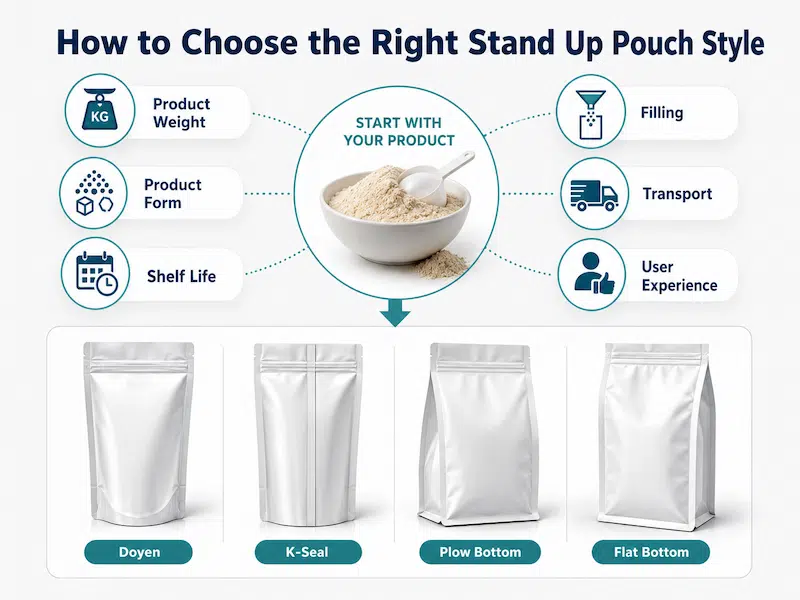
Product Weight
Product weight affects the bottom structure.
Lightweight products may work well with a Doyen pouch. Medium-weight products may need a K-seal pouch. Heavier products may require a plow bottom or flat bottom pouch.
This is why two pouches with similar dimensions can perform differently after filling.
Product Form
Different product forms behave differently inside the pouch.
Powders may need better moisture protection and cleaner sealing. Liquids need stronger leak resistance. Pet food may need puncture resistance and grease resistance. Coffee may need aroma protection and oxygen control.
The pouch style should match the product behavior.
Shelf Life Requirement
Shelf life is closely related to material structure.
If the product is sensitive to moisture, oxygen, light, or aroma loss, the film structure may be more important than the pouch shape.
A beautiful pouch with the wrong barrier material can still cause product quality problems.
Filling Process
The pouch must be easy to open, fill, and seal.
If the opening is too narrow, the zipper position is too high, or the bottom does not expand well, filling may become slow or unstable.
Before mass production, it is better to test the pouch with the real product.
Transportation Conditions
Packaging is not only tested on the shelf.
It also needs to go through stacking, vibration, pressure, temperature changes, and delivery impact.
For heavier products or long-distance shipping, seal strength, puncture resistance, film flexibility, and carton packing method should all be considered.
Customer Experience
The pouch should also be convenient for the final user.
A zipper can improve storage. A spout can make pouring easier. A window can help customers see the product. A flat bottom structure can make the product look more stable on the shelf.
Good packaging should protect the product and make the product easier to use.
Stand Up Pouch Style Recommendations by Product
Different industries often need different pouch structures. This section helps brands connect product categories with practical pouch options.
Product Type | Key Packaging Requirements | Suitable Pouch Styles | Important Notes |
Coffee | Aroma protection, oxygen barrier, freshness protection, optional degassing valve | Stand up pouches, flat bottom pouches | For premium coffee, flat bottom pouches can create stronger shelf presence and a more structured look. |
Pet Food | Puncture resistance, grease resistance, strong sealing, larger filling capacity | K-seal pouches, plow bottom pouches, flat bottom pouches | Larger pet food packs usually need stronger bottom support and better sealing strength. |
Powder Products | Moisture protection, clean sealing, easy resealing | Zipper stand up pouches, K-seal pouches, flat bottom pouches | The zipper and seal area should be designed carefully to reduce powder contamination during filling and use. |
Snacks and Nuts | Moisture protection, shelf display, resealability, product visibility | Doyen pouches, zipper pouches, window pouches | Window pouches can help show the product directly, while zipper pouches improve convenience after opening. |
Liquid Products | Leak resistance, drop resistance, strong sealing, liquid compatibility | Spout pouches, strong-seal stand up pouches | Drop testing, spout compatibility, and material compatibility with the liquid are very important. |
Personal Care and Household Products | Leak prevention, refill convenience, product usability, brand recognition | Spout pouches, zipper pouches, shaped pouches | Refill products, gels, detergents, and personal care liquids often use spout pouches. For non-liquid products, shaped or zipper pouches can improve user experience. |
Common Mistakes When Choosing Stand Up Pouch Styles
Many packaging problems happen because the pouch is selected too quickly. A style may look good in a sample photo, but the real test happens during filling, shipping, storage, and customer use.
Choosing Only by Appearance
A pouch may look attractive, but appearance does not guarantee performance.
If the structure does not match the product weight, filling method, or shelf life requirement, problems may appear later.
Making the Film Too Thick
Some brands think thicker film always means stronger packaging.
This is not always true.
Strength depends on the full material structure, seal layer, flexibility, puncture resistance, and pouch design. A thicker pouch may increase cost without solving the real problem.
Ignoring the Seal Area
The seal area is one of the most important parts of a pouch.
If the sealant layer is not suitable, or if powder, oil, or liquid contaminates the sealing area, the pouch may leak even when the film itself looks strong.
Adding a Window Without Checking Barrier Needs
A window can improve product visibility, but it may not be suitable for every product.
Products sensitive to oxygen, moisture, or light need careful window size and material selection.
Choosing a Premium Style Without a Clear Reason
Flat bottom pouches and shaped pouches can look premium, but they are not necessary for every product.
If the product is lightweight or price-sensitive, a standard stand up pouch may be more practical.
What Information Should You Prepare Before Customizing Stand Up Pouches?
Before requesting a quote, it helps to prepare the basic product and packaging details.
This allows the supplier to recommend a pouch style based on real product needs instead of guessing.
Useful information includes:
- Product type
- Product weight or filling volume
- Target pouch size
- Shelf life requirement
- Filling method
- Storage conditions
- Shipping method
- Need for zipper, valve, spout, or window
- Printing design and finish preference
- Estimated order quantity
The more clearly these details are provided, the easier it is to choose the right pouch structure, material, and customization plan.
Final Thoughts
There is no single best stand up pouch for every product.
The right pouch style depends on what the product needs: snacks may only need a simple Doyen pouch, powders need better moisture protection and zipper sealing, pet food requires stronger puncture resistance, coffee may need a flat bottom pouch with a valve, and liquids often need a reliable spout pouch.
Good packaging is not about choosing the most expensive structure. It is about finding the pouch style that protects the product, supports filling, looks good on the shelf, controls cost, and improves the customer experience.